
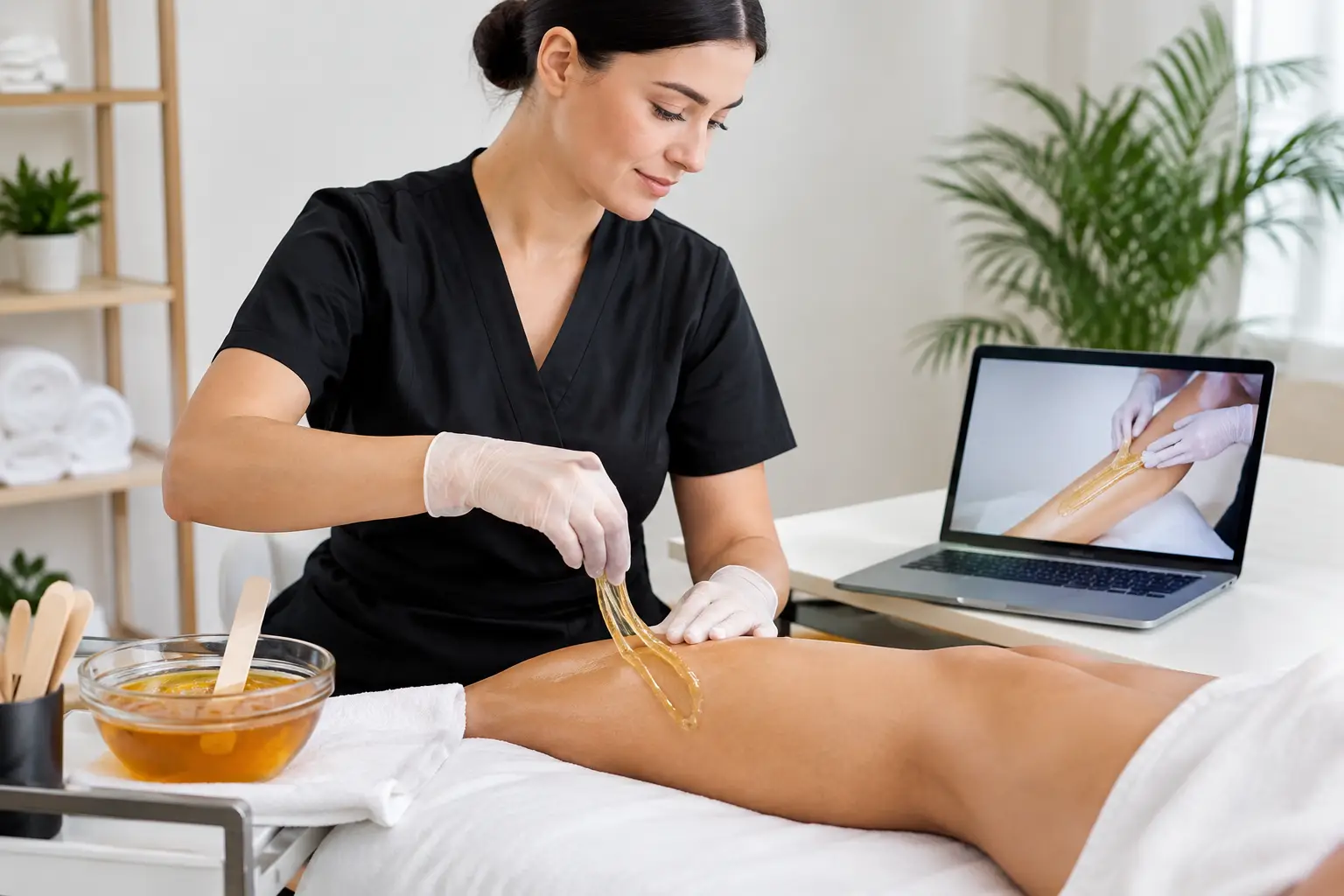
A beautiful sugar service is not simply about removing hair. It is about reading the skin, maintaining a clean treatment space, working with intention, and helping a client feel comfortable in their body. That is why the question, can estheticians learn sugaring online, deserves a more thoughtful answer than a simple yes or no.
Yes, online education can be an effective way for estheticians to learn professional sugaring. But the quality of the program, the student’s commitment to practice, and the support available after the lessons matter deeply. Sugaring is a hands-on skill, and strong virtual education needs to make room for hands-on repetition, thoughtful feedback, and real-world client care.
Can Estheticians Learn Sugaring Online and Work Professionally?
Estheticians can absolutely build a foundation in sugaring through online training. A well-designed program can teach the theory, service flow, sanitation expectations, product knowledge, skin considerations, and hand movements that shape a professional appointment. Online learning also gives students the advantage of pausing demonstrations, revisiting technical details, and practicing on a schedule that works around school, family, or an existing job.
For an esthetician who already understands basic skin care and treatment-room standards, sugaring education can be a focused way to add a valuable service to an existing menu. For someone entering the beauty industry or returning after time away, online training can offer a flexible starting point while building confidence step by step.
Still, watching a technique and performing it are different experiences. Sugar paste responds to body temperature, room conditions, hair texture, and the practitioner’s touch. Students need time to develop a feel for the paste, learn how to maintain proper tension, and adjust their pace without losing client comfort. The best online programs recognize this reality instead of presenting sugaring as a skill learned in a single afternoon.
What Professional Online Sugaring Training Should Teach
A quality course should begin with more than a demonstration of application and removal. Sugaring practitioners work closely with skin, often in sensitive areas, so technical skill must sit alongside safety, cleanliness, consent, and communication.
Technique Starts With Product Control
Professional sugaring requires an understanding of paste consistency, temperature, pressure, and direction. Students should be taught why the paste is applied and removed in specific ways, not only asked to copy a movement on screen. Knowing the reason behind each step helps a practitioner troubleshoot when hair is short, growth patterns change, or paste behavior shifts during a service.
Clear close-up demonstrations are especially helpful. Students should be able to see hand placement, wrist movement, the amount of paste used, and the pace of each section. Replays matter because small technical details often become clear only after a student has practiced a few times.
Sanitation Is Part of the Service, Not an Add-On
Clients trust their esthetician with their skin and their comfort. That trust is earned through consistent professional standards. Online training should cover preparing a treatment area, proper glove use, single-use supplies, handling products hygienically, and preventing cross-contamination.
These habits should be presented as part of a luxurious, caring service experience. A clean, organized room helps clients relax. It also helps practitioners work with confidence, knowing their process protects every person who walks through the door.
Skin Knowledge and Client Screening Matter
Not every client arrives with the same skin needs, hair growth, or service history. A capable sugaring practitioner learns how to ask useful questions before beginning, observe the skin, and recognize when it may be better to postpone or modify a service.
Training should address consultation, informed consent, contraindications, aftercare, and how to set realistic expectations. It should also prepare students to serve clients with sensitivity and respect across different ages, body types, and comfort levels. The goal is never to make someone feel judged. The goal is to provide thoughtful care.
Client Communication Builds Loyalty
A technically correct service can still feel impersonal if communication is rushed or unclear. Estheticians need language for welcoming first-time clients, explaining what will happen, checking in about comfort, and discussing home care afterward.
This is especially meaningful for intimate services, where a calm and professional presence can transform a nervous appointment into a positive one. Good training teaches practitioners to be direct without being clinical, warm without overpromising, and attentive without making assumptions.
The Missing Piece: Practice With Feedback
Online education works best when it is active, not passive. Students should expect to practice repeatedly on appropriate models and document their progress. Early sessions may feel slow. That is normal. Smooth technique comes from deliberate repetition, not from rushing to book a full day of clients.
Feedback is what turns practice into progress. Look for training that provides a way to ask questions, submit work, participate in coaching, or receive guidance from an experienced educator. A student may not realize that their paste is too warm, their hand pressure is inconsistent, or their preparation needs adjustment until someone knowledgeable points it out.
If a course offers only pre-recorded videos and no opportunity for support, it may still be useful as an introduction. It is less likely to provide the full confidence needed for professional services. The strongest virtual learning experience combines detailed lessons with accessible mentorship and a clear path for continued skill development.
How to Know Whether Online Learning Is Right for You
Online sugaring training can be a wonderful fit for self-directed learners. It is particularly useful for estheticians who value flexibility and are willing to create a consistent practice routine. Before enrolling, be honest about how you learn best.
Ask yourself whether you can set aside regular time to watch, practice, review, and refine. Consider whether you have access to suitable practice models and a clean space where you can build your routine. Also check the professional requirements where you intend to work. Licensing and scope-of-practice rules vary by location, and a training certificate does not replace any credential required by your state or local authority.
Some students thrive with online instruction because they can revisit every lesson until the sequence feels natural. Others benefit from adding in-person mentorship or advanced workshops later. There is no single right path. What matters is choosing education that respects the seriousness of the service and supports the way you will actually learn.
Questions to Ask Before Choosing an Online Sugaring Course
Before you invest, look beyond polished photos and broad promises. A professional program should be clear about what is included, what is expected of students, and how skill is assessed. Consider these questions:
- Does the course teach sanitation, consultation, aftercare, and client comfort alongside technique?
- Are demonstrations detailed enough to show hand placement, paste handling, and service flow?
- Is there educator access, feedback, or a community where students can get answers?
- Does the program explain how to practice safely and build confidence before working with paying clients?
- Are the educator’s standards aligned with the kind of thoughtful, skin-conscious practice you want to offer?
The answers reveal whether a course is designed to help you become capable or simply to help you finish modules.
Building Confidence After Your Training
Completing a course is a beginning, not a finish line. Give yourself permission to grow through repetition. Practice your consultation script. Refine your setup until it feels organized. Pay attention to timing, client positioning, and the small details that make a service feel calm and polished.
Start with the areas and techniques you feel most confident performing, then expand as your control improves. Keep notes after practice sessions and client appointments. What worked well? Where did you hesitate? Which questions came up more than once? Those observations become part of your professional education.
At The Sugar Shack, sugaring education is grounded in the belief that skilled practitioners create better experiences for everyone. Technique matters, but so do compassion, cleanliness, and the confidence to care for each client as an individual.
Online training can give estheticians a meaningful, flexible route into sugaring when it is paired with serious practice and reliable support. Choose education that asks you to slow down, learn the why behind the movement, and build a standard of care you will be proud to bring to every appointment.