
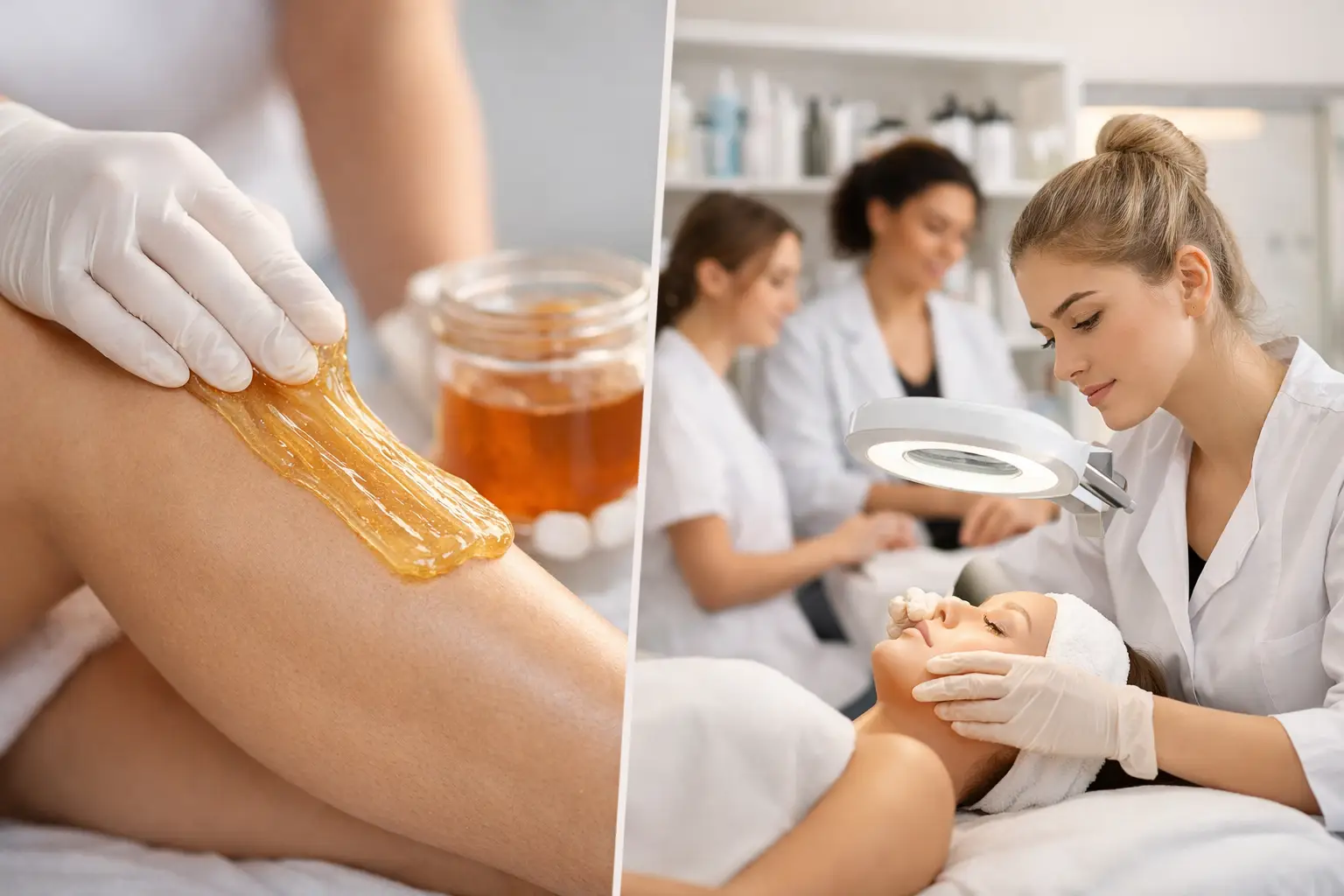
A client has booked their first Brazilian. They are nervous, their skin is sensitive, and they have questions about comfort, cleanliness, and aftercare. That moment makes the choice between sugaring certification versus esthetics school feel much more real. The best path is not simply the fastest or the most comprehensive one. It is the path that gives you the legal eligibility, technical skill, sanitation habits, and calm confidence to care for people well.
For some future practitioners, a focused sugaring certification is a practical next step into a specialized service. For others, esthetics school provides the broader foundation they need before specializing. Both can be valuable. The right fit depends on where you are starting, how you want to work, and the requirements where you plan to offer services.
What a sugaring certification teaches
Sugaring certification is specialized education focused on the art and business of professional hair removal with sugar paste. Rather than covering the full range of skin and beauty services, it concentrates on the skills that shape a safe, comfortable, consistent sugaring appointment.
A quality program should teach more than how to remove hair. Students need to understand paste consistency, hand positioning, body mechanics, hair growth patterns, skin preparation, application and removal technique, and how to work efficiently without compromising a client’s comfort. They should also learn practical service details, including consultation, contraindications, hygiene, aftercare, booking expectations, and professional boundaries.
This focused approach can be especially appealing to licensed beauty professionals who want to expand their menu, as well as people looking for a practical skill that may support a flexible side business or career change. Because the training is centered on one modality, students can spend meaningful time building the muscle memory and troubleshooting ability that sugaring requires.
That specialization matters. Sugar paste is responsive to temperature, humidity, hair texture, skin condition, and technique. Knowing the basic steps is different from being able to adjust calmly when a client is new, pregnant, prone to sensitivity, or returning after a long break from hair removal.
Certification is not automatically a license
This is the point that deserves the most care. A certificate shows that you completed training. It does not automatically grant permission to practice professionally in every city, state, province, or workplace.
Licensing and scope-of-practice rules vary. Some areas require an esthetics or cosmetology license for hair-removal services, while others may have different rules for specialized services, home-based businesses, or independent contractors. Local public health requirements, insurance expectations, and salon policies may also apply.
Before enrolling, confirm what is required where you intend to work. Ask whether a professional license is needed, whether your training is accepted by insurers or employers, and what sanitation or business standards apply. Clear answers protect both your future business and the clients who trust you with their care.
What esthetics school provides
Esthetics school is a broader professional education. Depending on the program and local requirements, students may study skin anatomy, physiology, facials, product knowledge, infection control, client consultation, makeup, and a range of beauty services. It often prepares graduates for a licensing examination where one is required.
The greatest advantage is breadth. If you want a long-term career that includes skin care, multiple service categories, or employment in a spa or salon setting, esthetics school can create a wider professional base. You gain familiarity with skin conditions, consultation practices, sanitation systems, and service professionalism that can support many types of client relationships.
That broader education also takes more time and investment. Programs can involve substantial tuition, a fixed schedule, clinic hours, examinations, and a curriculum that includes subjects you may not plan to offer. For someone whose clear goal is to become highly skilled in sugaring, that can feel like a long route to one focused destination.
Still, broader does not always mean deeper in every specialty. A general esthetics curriculum may introduce hair removal, but it may not provide extensive practice with sugar paste or the advanced judgment needed for a premium full-body sugaring service. Many estheticians choose specialized certification afterward for exactly that reason.
Sugaring certification versus esthetics school: how to choose
Start with your required credential. If your local regulations require an esthetics license to offer sugaring professionally, esthetics school is not optional. It is your foundational step, and a dedicated sugaring certification can follow to refine your specialty.
If a focused certification meets the rules where you plan to work, consider the kind of career you want to build. Someone who wants to add one in-demand service to an existing practice may benefit from specialized training. A person who wants a broad spa career may be better served by esthetics school first. A career-reentry student may value a more direct learning path, provided they can meet all legal, insurance, and public health obligations.
It also helps to think about the environment you want to create. Sugaring is an intimate service built on trust. Clients remember whether you explained the process clearly, protected their privacy, used sanitary practices, and responded thoughtfully when they felt anxious. Your education should prepare you for those human moments, not only the technical ones.
Compare the investment beyond tuition
Tuition is only one part of the decision. Esthetics school usually represents a larger financial and time commitment, but it may open access to broader roles and meet licensing requirements. Certification is often shorter and more targeted, allowing qualified students to apply a specialized skill sooner.
Then consider the ongoing costs of practice. Professional paste, gloves, linens, treatment furniture, sanitation supplies, booking software, insurance, continuing education, and time spent building a client base all belong in the picture. A lower-cost course is not necessarily the better value if it leaves you underprepared to work safely or confidently.
Look closely at what each program includes. Does it offer detailed sanitation education? Is there supervised practice and useful feedback? Are student models involved? Does the training address client consultation, sensitive skin, Brazilian services, aftercare, and practical business questions? Is there support when you begin working with real clients?
The goal is not to collect a certificate quickly. It is to develop a professional standard you can repeat appointment after appointment.
Questions to ask before you enroll
Ask the training provider how much hands-on practice is included and whether you will receive feedback on your technique. Find out whether the program teaches consultation, contraindications, hygiene protocols, and client care alongside service mechanics. Ask what happens after training if you need a refresher or encounter a challenging situation.
If you are considering esthetics school, ask how much of the curriculum is devoted to hair removal and whether it includes sugaring specifically. You may find that the most effective plan is a combination: broad esthetics education for licensing and skin-care knowledge, followed by focused certification for advanced sugaring technique.
Also ask yourself what support you need to stay motivated. Some students thrive in a long, structured school setting. Others do their best learning when education is direct, practical, and immediately connected to the service they want to offer. There is no lesser choice here. There is only the choice that responsibly supports your goals.
The standard clients can feel
Whether you begin with certification or esthetics school, your education should lead to more than a new service menu item. It should help you create appointments where clients feel respected, informed, and comfortable in their own skin.
At The Sugar Shack, professional sugaring education is grounded in thoughtful technique, strong sanitation practices, and the confidence to care for every client with warmth. Choose the path that meets your local requirements, gives you room to practice, and helps you show up ready to make smooth, skin-conscious care feel like the self-care ritual it should be.