
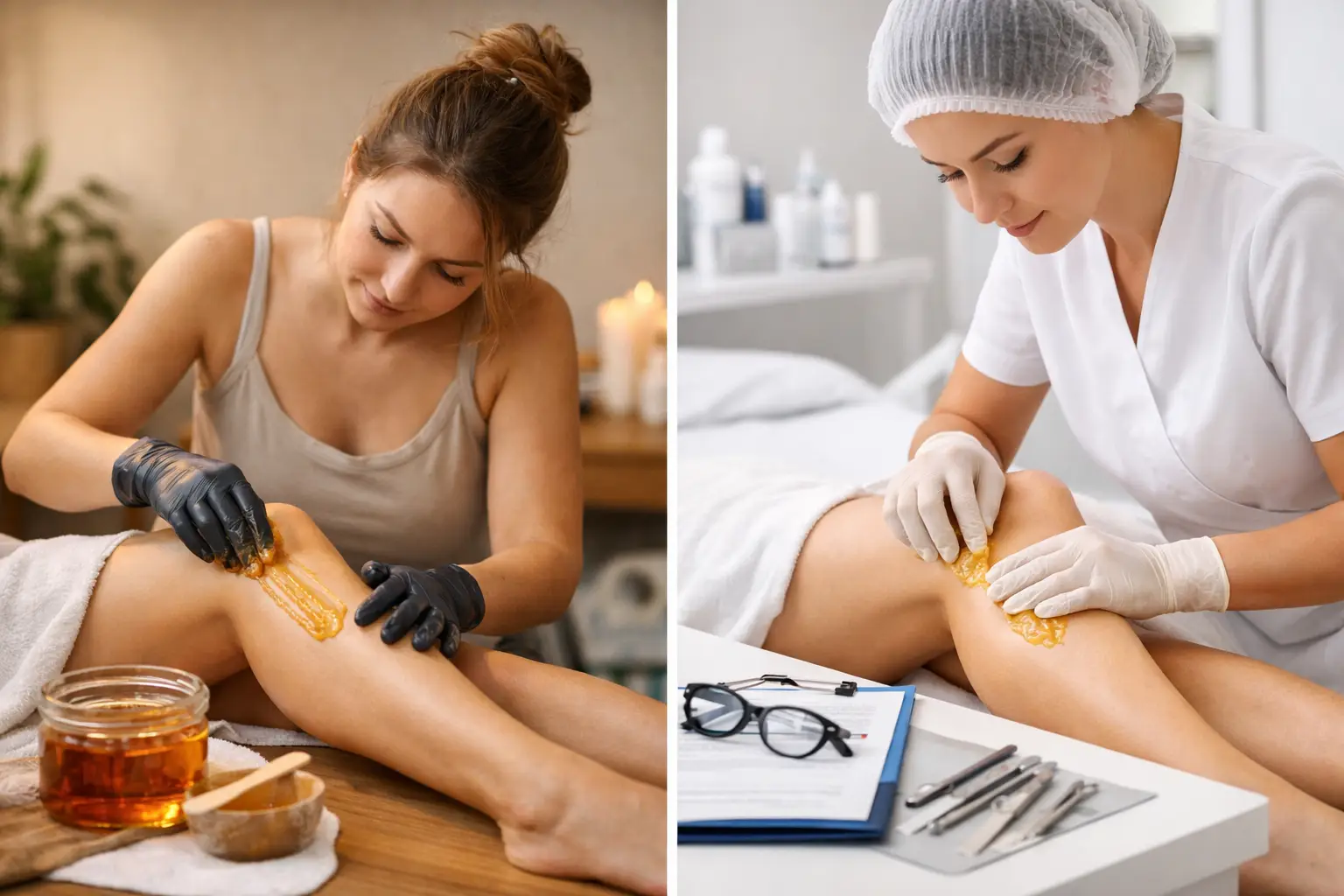
A client books a Brazilian service, has sensitive skin, feels nervous, and wants to know they are in capable hands. That moment is where the self taught versus sugaring certification decision becomes very real. Sugaring may look simple from the outside, but professional results depend on far more than knowing how to remove hair.
The paste, the hand technique, the pace of the appointment, sanitation, skin observation, communication, and aftercare all work together. If you hope to offer sugaring professionally, the question is not whether you can learn pieces of the process on your own. You can. The better question is whether self-study gives you the consistent, client-ready foundation your future business deserves.
What Self-Taught Sugaring Can Teach You
There is value in curiosity. Watching demonstrations, reading about skin, practicing movement patterns, and learning the basics of sugar paste can help a beginner understand whether this work feels exciting and suited to them. For an esthetician who already has a strong grounding in sanitation, consultation, and hands-on services, independent learning may also make professional training feel more familiar.
Self-directed learning is flexible. You can study around a current job, caregiving responsibilities, or school. It can also be a low-pressure way to explore the industry before making a larger commitment. Many future practitioners begin exactly this way: intrigued by the ancient practice and drawn to a hair-removal service that can feel more gentle, precise, and skin-conscious.
But videos and written instructions do not watch your hands. They cannot correct your body position, tell you why the paste is behaving differently in a warm room, or spot a sanitation gap between clients. They also cannot replicate the pressure of adapting technique when a guest is anxious, their hair growth is mixed, or their skin needs a more thoughtful approach.
Personal practice is one thing. Charging clients is another. Once money changes hands, a practitioner is responsible for comfort, hygiene, professional boundaries, and an experience that earns trust from the first appointment onward.
Where Self-Study Can Fall Short
Sugaring is tactile work. The difference between a smooth, efficient service and a frustrating one often lives in details that are difficult to diagnose alone: the temperature and consistency of the paste, finger placement, the direction of application and removal, tension on the skin, and the timing of each movement.
When a beginner is working without feedback, they may repeat a small error until it becomes a habit. That can lead to extra discomfort, broken hairs, inconsistent results, unnecessary product waste, or appointments that take much longer than they should. None of those outcomes mean someone lacks potential. They simply show why guided practice matters.
Sanitation deserves equal attention. Professional sugaring requires clear procedures that protect every client and prevent cross-contamination. A polished service is not just a beautiful treatment room or a lovely jar of paste. It is the quiet confidence that comes from following clean, repeatable systems every single time.
Client care is another skill that cannot be learned fully from a script. A capable practitioner knows how to create a welcoming consultation, communicate honestly about expectations, recognize when to pause, and recommend appropriate home care. They understand that bodies, skin, comfort levels, and goals are personal. Everyone deserves respectful, informed service.
Self Taught Versus Sugaring Certification: The Real Difference
The biggest difference is accountability. Self-teaching relies on you to find accurate information, interpret it correctly, notice your own mistakes, and set your own standards. Certification training gives you a structured path, experienced instruction, and a clearer benchmark for what professional readiness looks like.
A quality certification program should teach more than a sequence of hand movements. Look for education that includes skin and hair basics, consultation, contraindications, sanitation protocols, paste handling, body positioning, service flow, client communication, aftercare, and supervised or assessed practical work. The goal is not merely to receive a certificate. It is to build reliable judgment.
Certification can also help a new practitioner speak with confidence about their services. Clients often have questions before booking intimate or full-body appointments. They want to understand what to expect, how to prepare, what the environment will feel like, and how their skin will be cared for afterward. Training gives you the knowledge to answer clearly instead of guessing.
That confidence has business value, too. When your work is consistent, clients are more likely to return on a maintenance schedule and recommend you to people they trust. You can price your service with greater clarity because you are offering skilled care, not simply a quick treatment.
A Certificate Is Not the Only Requirement
Certification matters, but it is not a substitute for understanding the rules where you plan to work. Requirements for personal services can vary by state, province, city, insurer, employer, or rental salon. Before accepting clients, confirm the credentials, insurance, permits, health requirements, and business policies that apply to your situation.
It is also worth asking what a program means by “certified.” Some courses issue a completion certificate after lessons are viewed. Others include practical assessment, instructor feedback, and a demonstrated standard of technique. Neither format is automatically right or wrong, but they are not equivalent. Choose the level of support that matches your experience and career plans.
Who May Benefit Most From Certification
Certification is especially valuable for anyone starting from scratch, returning to work after time away, or planning to build a side business into a steady career. It offers a framework when you do not yet know what you do not know.
It is also a smart choice for practicing estheticians who want to add a specialized service to their menu. Existing professional experience provides a strong base, but sugaring has its own pace, paste control, and service protocols. Specific training helps protect the standard of care clients already expect from you.
For side hustlers, structured education can prevent a common and expensive mistake: investing in supplies before developing the ability to use them confidently. Learning the right systems early can reduce wasted product, inconsistent appointments, and the stress of trying to troubleshoot alone.
At The Sugar Shack, professional education is rooted in the same standards that shape a premium studio experience: thoughtful technique, clean practices, client comfort, and respect for every body. That connection matters. Training should prepare you to perform a service, but it should also help you understand how to make people feel safe, seen, and cared for.
How to Choose a Sugaring Training Program
Start by looking past the promise of a fast certificate. Ask who created the course and whether they actively work with clients. Experienced educators can explain the real-life situations that arise in treatment rooms, not just the ideal version shown in a demonstration.
Consider how you learn best. Online training can be an excellent fit when it provides clear demonstrations you can revisit, detailed theory, opportunities for feedback, and a pathway for practical questions. In-person learning may suit students who benefit from immediate correction and shared practice. A hybrid approach can offer the strengths of both.
Ask how the program handles sanitation and client safety. Those subjects should not be a brief footnote. They belong at the center of professional education. You should also understand what support is available after training. A new practitioner may have questions after their first few services, and access to knowledgeable guidance can make those early months far less isolating.
Finally, be honest about your goal. If you are learning solely for personal knowledge, self-study may satisfy your curiosity. If you want to build a reputation, earn income, and welcome clients into your care, certification is usually the more responsible starting point.
The best practitioners keep learning long after their first certificate is framed. Begin with training that gives you sound technique and strong standards, then let every thoughtful appointment deepen the confidence behind your hands.