
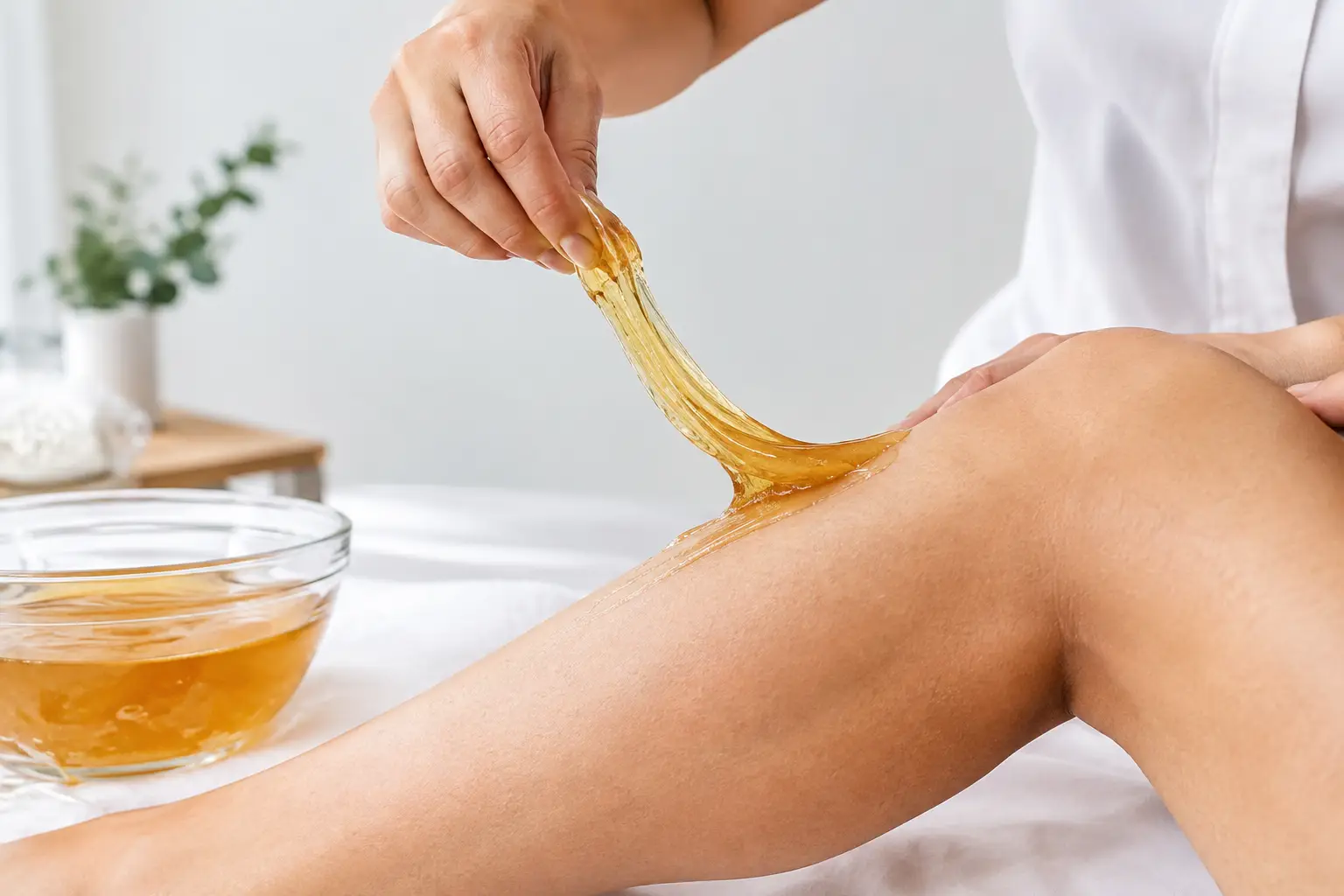
A smooth sugaring service is not about rushing through an appointment or using more paste. The sugar flicking technique is the controlled movement that helps lift hair cleanly while respecting the skin beneath it. When it is done well, clients notice the difference: less unnecessary pulling, a more comfortable service, and skin that looks beautifully cared for afterward.
For clients, this technique is one reason professional sugaring feels so considered. For practitioners, it is one of the skills that separates simply applying paste from delivering consistent, high-quality results. It takes practice, body awareness, and a clear understanding of how hair grows in each area of the body.
What Is the Sugar Flicking Technique?
The sugar flicking technique is the quick, low, controlled release used to remove the sugar paste and the hair it has gripped. A practitioner molds the paste into the skin with intention, then uses a precise flicking motion to release it in the direction of natural hair growth.
The word “flick” can make the movement sound casual. It is not. The motion is deliberate and compact, with the paste staying close and parallel to the skin rather than being pulled upward. The practitioner maintains skin tension, uses the right amount of pressure, and follows the body’s natural contours.
That combination matters. Hair grows in different directions across the legs, underarms, bikini area, face, and other body areas. A skilled practitioner reads that growth pattern before beginning, then adjusts their hand placement and flicking direction as needed. This is why professional results are not based on a one-motion-fits-all approach.
Why Technique Matters for Comfort and Results
Sugaring paste is designed to be worked into the skin and around the hair before it is removed. The flick is only one part of the process, but it is the moment where technique becomes especially visible. A clean release can help remove short, fine, or more established hair effectively without repeatedly working over the same area.
A flick that travels too far away from the skin can create more tugging than necessary. One that is too slow may not release the paste cleanly. If the skin is not held taut, the service can feel less comfortable and the result may be less thorough. These details are especially relevant in delicate areas, on mature skin, and for clients whose skin needs an extra-gentle approach.
Good technique also supports a polished finish. When hair is removed efficiently, there is less need for unnecessary repetition. The result is a service that feels calmer, more intentional, and more comfortable from start to finish.
The Elements of a Professional Flick
There is no single flick that works everywhere. The right movement depends on the client’s hair texture, hair growth direction, skin condition, body area, and the consistency of the sugar paste. Still, skilled practitioners rely on a few consistent principles.
Skin tension comes first
The skin should be supported and held taut before the paste is released. This creates a stable surface and reduces movement during the flick. In areas where the skin is softer or more mobile, thoughtful positioning is not optional. It is part of client comfort and safe, professional service.
A practitioner may ask a client to help hold skin in a particular position when appropriate. Clear, respectful communication makes this feel easy rather than awkward, especially during intimate services. Clients should always know what to expect and feel comfortable speaking up if they need a pause or adjustment.
The paste stays close to the skin
The release should travel along the skin, not high into the air. Think of the motion as a quick, confident sweep that remains close to the body. This helps the paste release efficiently and avoids the long pull that can make hair removal feel more intense.
This is one of the most common areas where new practitioners need coaching. It is tempting to use a bigger movement when learning, but a broad swing often reduces control. A smaller, sharper flick is usually more effective.
Direction follows the hair
Professional sugaring works with the direction of natural hair growth. That requires observation before the first application of paste and continued attention as the service progresses. Growth can change within a small area, particularly around underarms, knees, and intimate zones.
A practitioner who slows down long enough to map growth can make more accurate decisions about paste placement and release. This attention to detail is a meaningful part of a premium service. It also explains why a thoughtful appointment is never just about speed.
Pressure and paste consistency must match
Even an excellent hand motion will struggle if the paste is too firm, too soft, or improperly handled for the room temperature and service area. The practitioner needs to recognize what the paste is doing and adapt their technique accordingly.
Pressure matters, too. Too little molding may not allow the paste to fully engage the hair. Too much pressure can make the paste harder to manage and may be uncomfortable for the client. With experience, practitioners learn to feel the balance rather than force it.
What Clients Can Expect During a Skilled Service
Clients do not need to understand every technical detail to recognize a well-performed service. You may notice your practitioner checking hair direction, adjusting your position, or taking a moment before beginning a new section. These are signs of care, not hesitation.
You should also expect clean practices throughout the appointment. Professional sugaring requires strict sanitation, fresh gloves when appropriate, and a no-double-dipping approach so the product remains protected from cross-contamination. Technique and hygiene belong together. Beautiful results should never come at the expense of thoughtful professional standards.
Comfort is personal, and everyone’s experience is different. Sensitivity can vary based on the area being treated, your skin, your hair growth cycle, stress level, and whether this is your first appointment or part of a regular routine. An experienced practitioner will check in, work at a considerate pace, and help you feel informed rather than rushed.
Why Training Makes Such a Difference
The sugar flicking technique looks simple only after it has been practiced well. New practitioners need repeated hands-on experience to develop control, rhythm, paste management, proper body mechanics, and the ability to adjust when a service does not go exactly as planned.
Training also teaches the judgment behind the movement. When should the paste be adjusted? When does a section need to be approached from a different angle? How can a practitioner support a first-time client, work thoughtfully around sensitive skin, and maintain sanitation from consultation through aftercare? These decisions build confidence for both practitioner and client.
At The Sugar Shack, professional education is grounded in the belief that a great service combines technical skill with genuine care. Learning the flick is essential, but learning how to observe, communicate, sanitize, and adapt is what helps practitioners create an experience clients want to return to.
A Better Flick Is Not About Going Faster
It is easy to assume that experienced practitioners work quickly because they are moving faster. In reality, the best efficiency comes from precision. When hair direction is assessed correctly, paste is handled well, and each flick is controlled, the service tends to flow more naturally.
For clients, that means a smoother appointment with fewer unnecessary passes. For practitioners, it means less strain on the hands and body, more consistency across services, and a stronger professional reputation. Speed may come with practice, but it should never replace care.
The next time you receive a sugaring service, notice the quiet details: the careful skin support, the close-to-the-skin release, the attention to growth direction, and the calm confidence of your practitioner. Those small movements are where comfort, cleanliness, and radiant skin come together.