
A course can look polished on a sales page and still leave a new practitioner nervous when a real client walks through the door. That is why online sugaring courses ranked by price or certificate alone can be misleading. The best training does more than explain sugar paste: it teaches the judgment, sanitation habits, client communication, and repeatable technique that make a service feel safe, comfortable, and professional.
For estheticians adding a new service, career changers seeking flexible work, and side-hustlers building something of their own, online learning can be a valuable starting point. But courses are not interchangeable. A strong program helps you develop a skill you can confidently use with people, not simply a lesson you can complete.
How online sugaring courses are ranked for practitioners
The most useful way to rank online sugaring courses is by their ability to prepare you for client-facing work. Production quality matters, but clear video is only the beginning. Look for training that explains what to do, why it works, and how to adjust when hair, skin, temperature, or client comfort changes the situation.
A practical ranking starts with five areas: technique instruction, sanitation education, client-care guidance, instructor support, and career readiness. If a course is strong in only one area, it may be helpful as a refresher but less suitable as your main foundation.
1. Technique depth and visible demonstration
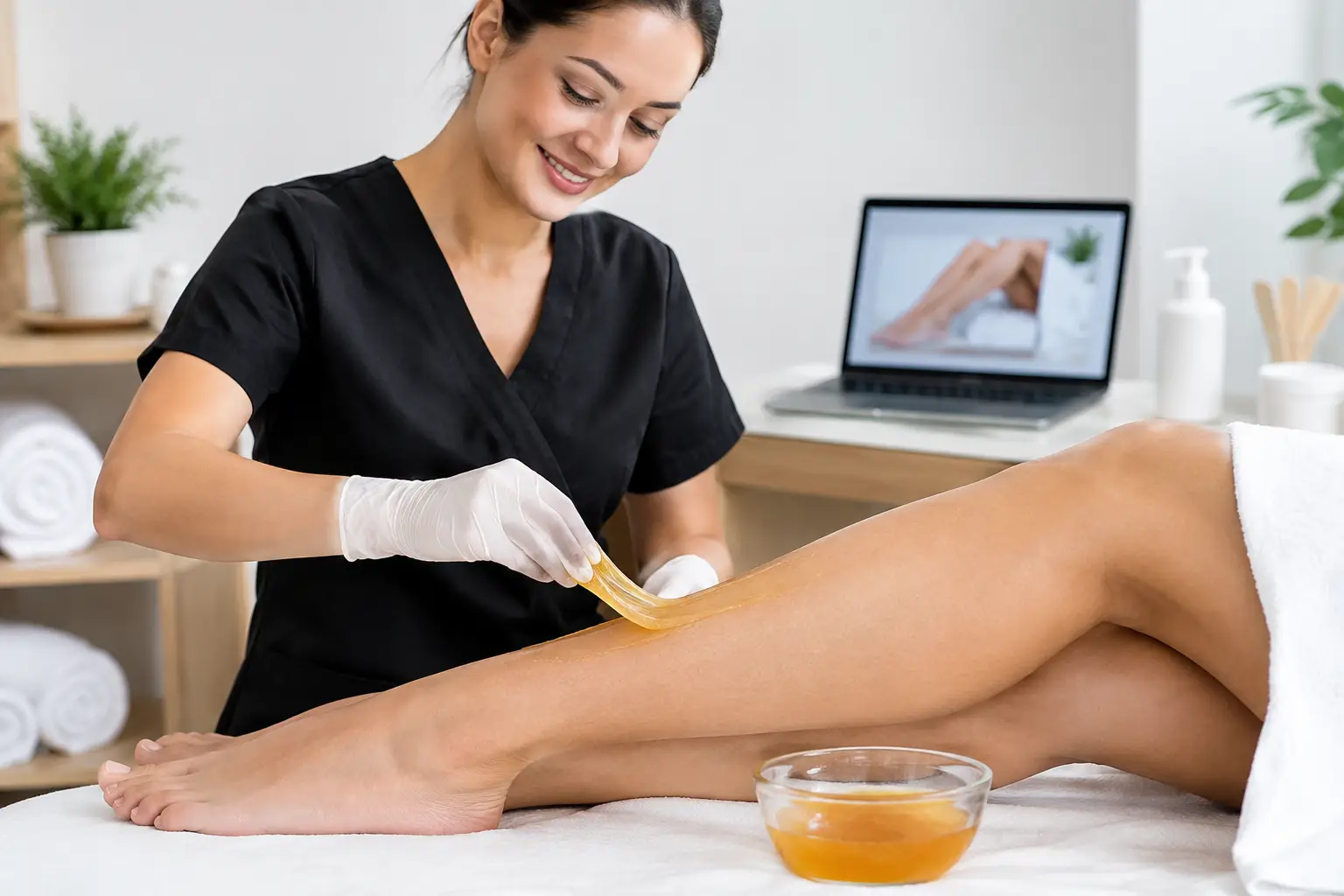
The highest-ranked courses show the full service process in enough detail that students can understand hand placement, paste control, body positioning, and pace. Sugaring is tactile. A student needs to see how the practitioner works with the paste, not just hear that the paste should be applied and removed in a particular direction.
Look for close-up demonstrations on different body areas and clear explanations of common sticking points. Does the educator explain how to manage paste consistency? Do they address short, coarse, or dense hair? Do they show how to maintain control without repeatedly going over sensitive skin? Those details separate a basic overview from education that supports quality results.
A course should also make room for practice. Watching a technique once is not the same as developing it. The strongest programs provide structured practice expectations, encourage students to work slowly at first, and explain how repetition builds speed without sacrificing client comfort.
2. Sanitation standards that fit real appointments
Sanitation is not an add-on module. It is one of the clearest signs of a professional practitioner. High-ranking online programs teach students how to prepare their treatment space, handle products responsibly, prevent cross-contamination, and maintain clean working habits from consultation through cleanup.
This matters because clients may not know every technical detail, but they can feel the difference between a service that is carefully organized and one that seems rushed or uncertain. Clean procedures build trust, especially during intimate services or appointments for clients with sensitive skin.
Be cautious of courses that mention hygiene only in passing. A certificate has limited value if the training does not clearly explain how safety and cleanliness show up in everyday service. Students should finish with habits they can carry into a salon suite, home studio, or future business.
3. Client consultation and comfort skills
A beautiful technique can still fall short if the practitioner does not know how to welcome, assess, and communicate with clients. This is where many entry-level courses leave a gap.
The best online sugaring courses include consultation guidance that helps practitioners ask the right questions, set realistic expectations, and create a calm experience. Students should learn how to discuss skin sensitivity, recent skincare routines, comfort preferences, service timing, and aftercare in simple, respectful language.
Comfort is also practical. A client who understands what will happen and feels heard is more likely to relax, follow aftercare guidance, and return for maintenance appointments. That is good service and good business.
Training should reflect that every body and every client experience is different. Pregnant clients, mature clients, first-time guests, and people with sensitive skin may need thoughtful adjustments. No online course can replace sound professional judgment, but it should teach students to recognize when they need to slow down, ask more questions, or postpone a service.
4. Instructor feedback and meaningful support
Self-paced learning is convenient, especially for students balancing work, caregiving, or a career transition. Its trade-off is that mistakes can become habits when no experienced educator is available to spot them.
Courses with feedback, live coaching, practice review, or a clear way to ask questions deserve a higher ranking than programs that simply provide videos and a final quiz. Support does not have to mean constant one-on-one access. It does mean students have a realistic path to clarification when technique feels awkward or a lesson raises questions.
Before enrolling, find out what support actually looks like. Is feedback included or an added cost? Is there a student community? How long can you access the material? Are questions answered by a trained educator with active practitioner experience? These answers affect the real value of the course far more than a dramatic discount.
5. Career readiness beyond the certificate
For many students, training is connected to income. They may want to add sugaring to an established menu, rent a treatment room, work toward self-employment, or develop a flexible service-based business. Courses should acknowledge that goal with practical, grounded guidance.
The highest-ranked programs help students think through service timing, menu building, product use, client retention, professional boundaries, and the practice required before taking paid appointments. They do not promise overnight success. Instead, they show how consistent standards, excellent care, and steady skill development create a reputation clients trust.
A certificate can be a useful milestone, but it is not the finish line. Check what the credential represents. Is completion based on watching lessons, passing a knowledge assessment, submitting practical work, or demonstrating technique? The more transparent a program is about its expectations, the easier it is to understand what you are truly earning.
A practical ranking of online course formats
Rather than declaring one course universally best, it is more honest to rank formats by the kind of support they typically provide.
Top tier: comprehensive online programs with feedback. These are the strongest choice for beginners and career changers. They combine detailed technique education, sanitation, client care, practice requirements, and educator access. They often cost more and require a deeper time commitment, but that investment can prevent costly uncertainty later.
Strong choice: structured self-paced certification programs. These can work well for trained estheticians who already understand treatment-room standards and need focused sugaring education. Their value depends on how thoroughly they demonstrate technique and whether support is available when needed.
Helpful supplement: focused advanced modules. Short courses on a specific body area, paste control, speed, or client communication can be excellent for practitioners who already have a solid foundation. They are not usually enough for someone starting from zero.
Lowest tier for professional preparation: brief, certificate-only classes. A quick introduction may satisfy curiosity, but it rarely offers enough repetition, sanitation depth, or practical guidance to prepare someone for paying clients. It can be a first look at the craft, not a complete professional pathway.
Questions to ask before you enroll
Course descriptions are designed to sound reassuring, so read past the broad promises. Ask whether you will see complete demonstrations, learn sanitation procedures in context, receive a product list, and have access to support while practicing. Find out whether the program addresses consultations, aftercare, sensitive skin, and client comfort rather than focusing only on hair removal.
It is also wise to consider your own starting point. An experienced esthetician may need a concise program with clear technical demonstrations. A student without beauty-service experience may benefit from more guidance, longer access, and personalized feedback. The right course is not always the shortest or least expensive one. It is the one that meets you at your current skill level and gives you a responsible path forward.
Programs developed by active practitioners, such as The Sugar Shack, can be especially valuable because the education is shaped by the realities of working with clients day after day. That perspective brings service standards, comfort, and practical decision-making into the lesson, where they belong.
A well-chosen online course should leave you feeling prepared to practice with intention, ask for help when needed, and build your skills one thoughtful appointment at a time.