
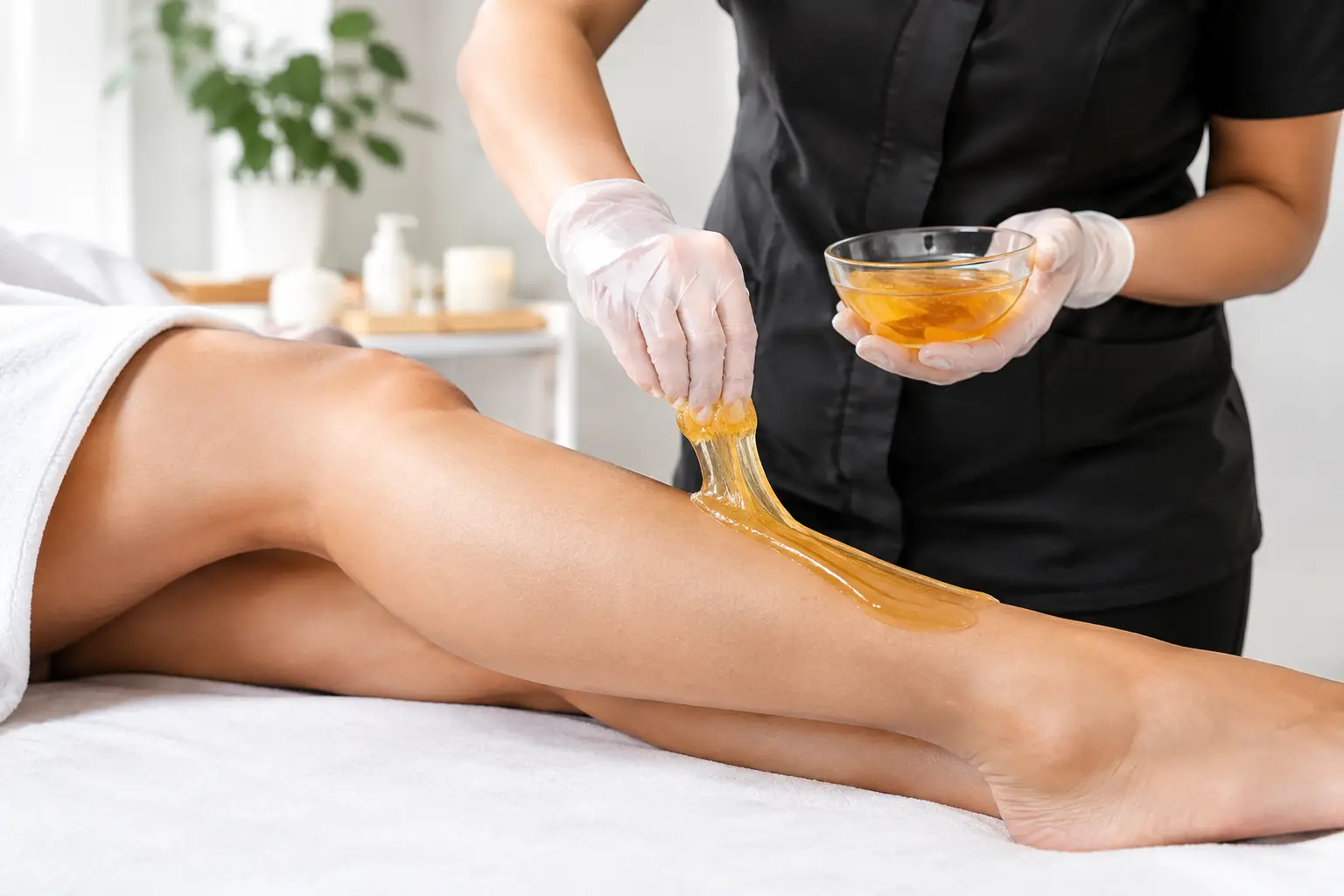
A client settles onto the treatment table, trusting that the person providing their service understands far more than hair removal. They are trusting their practitioner’s hygiene, technique, professional judgment, and ability to make them feel comfortable in a vulnerable moment. So, can estheticians offer sugaring services? In many places, yes – but the real answer depends on an esthetician’s license, their local scope of practice, and the training standards behind their service.
Sugaring can be a beautiful addition to an esthetic practice. It gives clients a skin-conscious option for full-body hair removal and gives beauty professionals an opportunity to expand their menu with a specialized, high-demand skill. But a jar of sugar paste and a short tutorial do not make someone ready to provide professional services. Safe, confident work comes from knowing the rules and building the hands-on knowledge to meet them.
Can Estheticians Offer Sugaring Services Under Their License?
Licensing is regulated locally, not by one universal rule. In the United States, each state sets its own requirements for estheticians, including what services fall within an esthetic license and whether additional credentials, inspections, or business registrations are required. Some states clearly include hair-removal services within an esthetician’s scope. Others use language that requires closer interpretation, especially when it comes to service locations, sanitation procedures, or independent practice.
That means an esthetician should never rely on a social media post, a colleague’s advice, or a training certificate alone when deciding whether they can offer sugaring. The appropriate licensing board or state regulatory agency is the source that matters.
Before adding sugaring to a menu, confirm whether your current license covers the service, whether your facility must be licensed or inspected, and whether your local city or county has separate business rules. If you rent a suite, work from home, or travel to clients, there may be additional requirements tied to the treatment environment.
A professional training course is valuable, but it is not a substitute for a state-issued license where licensure is required. Think of training and licensing as two different parts of the same professional foundation: licensing establishes the legal permission to practice, while specialized education helps you perform the service skillfully and responsibly.
Why Specialized Sugaring Training Still Matters
Even when sugaring is permitted under an esthetician’s license, it deserves dedicated education. The method looks simple from the outside, yet it asks for precision at every stage. Paste consistency, body positioning, skin tension, hair-growth patterns, temperature awareness, and product handling all influence the client’s comfort and the quality of the result.
A practitioner also needs to know when to pause. Skin that appears irritated, compromised, unusually reactive, or affected by a condition outside the practitioner’s scope calls for thoughtful judgment. Professional care is not about pushing through every appointment. It is about protecting the client’s skin, communicating clearly, and recognizing when a service should be postponed or adapted.
Strong education teaches more than a removal technique. It should cover consultation, contraindications, service setup, sanitation, client draping, aftercare, and how to work across different body areas, hair textures, and skin needs. Intimate services require an especially calm, respectful approach. Clients should feel informed, never rushed, and fully in control of their appointment.
At The Sugar Shack, professional sugaring education is built around this bigger picture. The goal is not simply to teach a sequence of movements. It is to help practitioners develop the confidence, consistency, and client-care standards that make a service feel polished from consultation through aftercare.
The Sanitation Standard Clients Should Expect
For many clients, cleanliness is not a bonus. It is the deciding factor in whether they book, return, and recommend a practitioner to someone else. A professional sugaring setup should reflect that from the moment a client enters the room.
Sugaring paste is typically made from simple ingredients, but natural ingredients do not remove the need for strict hygiene. Practitioners need a clear system for handwashing, glove use when appropriate, clean linens, surface disinfection, product storage, and preventing contamination during every service. Single-use applicators and a no-double-dipping practice are essential parts of professional product handling.
The treatment room matters, too. It should be clean, private, organized, and equipped for the service being performed. A client should never have to wonder whether the table has been properly prepared or whether a practitioner is reaching back into a product container after touching skin.
Sanitation training protects everyone. It supports client trust, helps practitioners meet regulatory expectations, and creates the kind of elevated experience people remember. When the process is thoughtful, clients can relax into their self-care rather than worrying about what is happening behind the scenes.
Start With the Business Questions, Too
An esthetician who is legally able and technically trained to offer sugaring still has a few practical decisions to make. Adding a service changes more than a booking menu. It affects timing, supplies, insurance, pricing, policies, and the overall client experience.
Professional liability insurance should specifically cover the services you perform. It is worth confirming this directly with your insurance provider rather than assuming a general policy applies. If you work within a salon, ask how the business handles sanitation procedures, incident documentation, client records, and shared treatment-space expectations.
Pricing deserves care as well. Sugaring is a specialized service, and clients are paying for the practitioner’s skill, hygiene, comfort, and attention to detail – not only the minutes on the clock. A rushed price point can lead to rushed appointments, which rarely serves clients or practitioners well.
It also helps to consider who you want to serve. Some practitioners build a menu around intimate hair removal, while others offer a broader selection of body services. Pregnant clients, people with sensitive or mature skin, and first-time guests may need extra time, tailored communication, or modified positioning. A clear intake process lets you create a more supportive experience before the appointment begins.
A Smart Path for Estheticians Adding Sugaring
If you are considering sugaring services, begin with clarity rather than momentum. Confirm your legal scope of practice first, then choose training that gives you meaningful practice and feedback. Watching demonstrations can introduce the method, but repeated guided practice is where body mechanics, confidence, and consistency begin to develop.
Look for education that addresses the real moments practitioners encounter: a nervous first-time client, short or coarse hair, sensitive skin, an unexpected skin response, missed hairs, awkward positioning, or an appointment that needs to be rescheduled for safety. The most useful training does not promise that every service will be effortless. It prepares you to handle variables professionally.
After training, give yourself time to refine your process. Practice on models within the boundaries of your licensing rules. Create consultation forms and aftercare instructions. Build a consistent room setup. Review your service timing before opening your schedule widely. This measured approach protects your confidence and gives clients the quality of care they deserve.
What Clients Gain From a Properly Trained Practitioner
Clients may not know every technical detail of sugaring, but they can feel the difference between a practitioner who is prepared and one who is improvising. They notice when the room is spotless, when instructions are clear, when their concerns are heard, and when their comfort guides the appointment.
A trained esthetician can explain what to expect without making unrealistic promises. They can offer practical pre- and post-service guidance, tailor the appointment to the client’s needs, and create a welcoming experience for all bodies. That blend of knowledge and kindness turns routine hair removal into something more restorative: time set aside to feel cared for, smooth, and confident.
For estheticians, sugaring can be a meaningful next step when it is approached with respect for the profession. Check the rules, invest in hands-on education, maintain uncompromising sanitation, and let client care set the standard. The skill you build will show up not only in the results, but in the trust clients feel when they return to your table.