
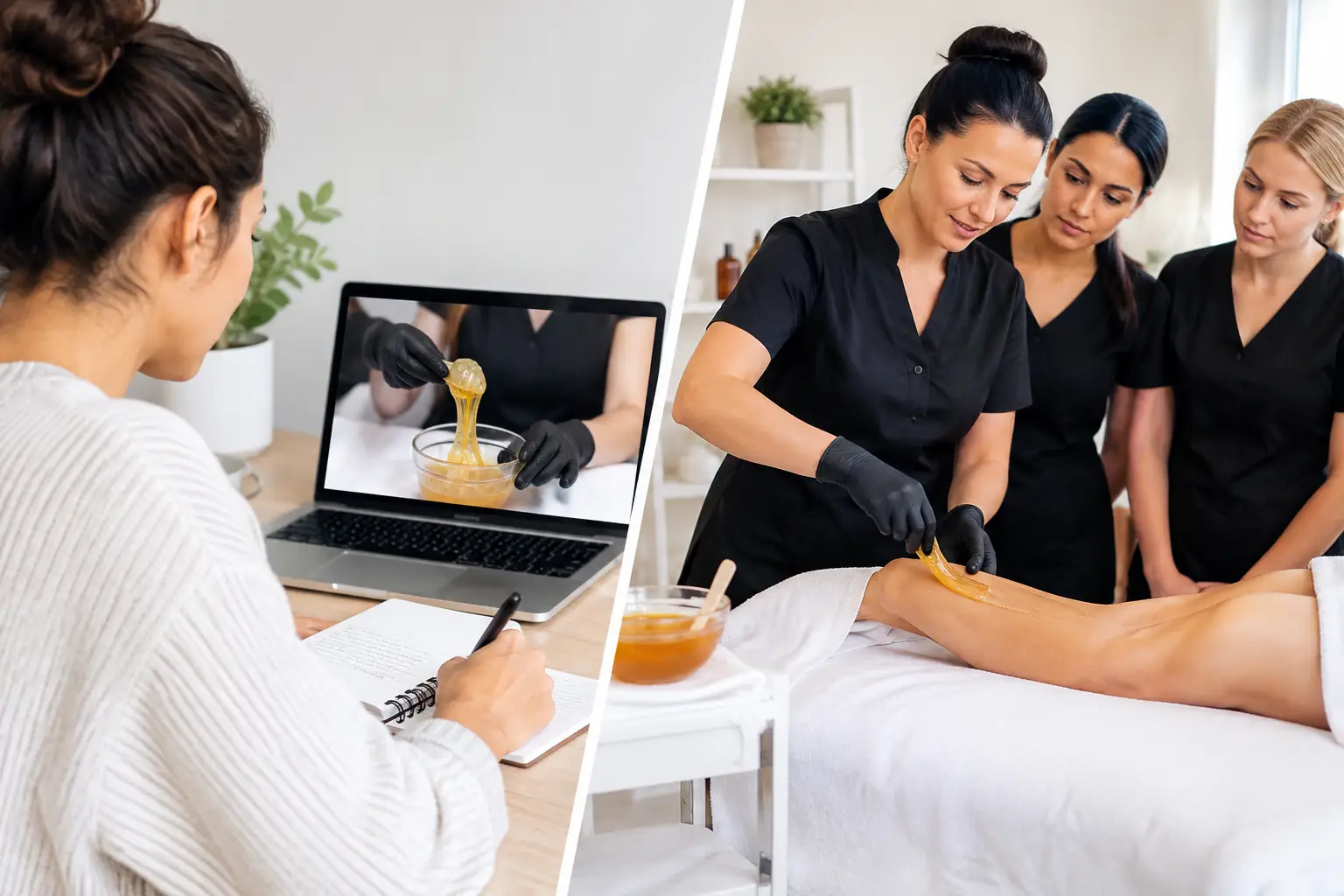
A beautiful result is not simply about removing hair. It comes from reading the skin, choosing the right amount of paste, maintaining a clean service, and helping a client feel genuinely comfortable in your care. That is why choosing online versus in person sugaring training deserves more thought than picking the option that looks quickest or least expensive.
Both learning paths can help you build a valuable, hands-on beauty skill. The best choice depends on where you are starting, how you learn, the support available to you, and how soon you hope to work with real clients. For some future practitioners, online learning creates a flexible entry point. For others, hands-on instruction is the confidence-builder that turns theory into a polished service.
What Every Sugaring Training Program Should Teach
Before comparing formats, look beyond the course label. Professional sugaring is a specialized technique. Quality training should teach more than a service sequence or a few motions to copy.
A strong program explains skin and hair basics, product handling, proper body positioning, sanitation, consultation skills, contraindications, client communication, and aftercare. It should also make room for practice and correction. Sugaring paste responds to warmth, humidity, hand pressure, hair texture, and the area being treated. Learning to adapt calmly is part of becoming a reliable practitioner.
Sanitation should never be treated as an add-on. Your clients are trusting you with their skin and, often, intimate services. A professional education should clearly address clean setup, single-use practices where appropriate, preventing cross-contamination, and maintaining a service space that feels as safe as it looks.
Finally, consider whether the training prepares you to care for people, not just perform a technique. Clients may arrive nervous, pregnant, managing sensitive skin, returning after a long break, or booking their first intimate hair-removal appointment. Knowledge is essential, but warmth, consent, discretion, and clear communication matter just as much.
Online Versus In Person Sugaring: The Real Difference
The central difference is not whether one format is legitimate and the other is not. It is how you receive feedback while building a physical skill.
Online training typically gives you control over the pace. You may be able to watch lessons around work, caregiving, school, or other responsibilities, then revisit a demonstration as many times as needed. In-person education places you in a focused learning environment where an educator can observe your hand placement, posture, paste consistency, and client interaction in real time.
Neither experience is automatically better for every student. What matters is whether the format provides enough structure, practice, and support for you to work safely and confidently afterward.
When Online Training Can Be a Great Fit
Online training can be an excellent choice for self-directed learners who need flexibility without lowering their standards. It can be especially practical for licensed beauty professionals who already understand service hygiene, client consultations, and treatment-room flow, but want to add sugaring to their menu.
The ability to pause and replay detailed demonstrations is a real advantage. A student can review paste preparation, application, removal technique, and body-area protocols until the sequence makes sense. This is helpful because new practitioners often need to see a movement more than once before they can begin practicing it with intention.
Online education can also make specialized instruction more accessible when travel is difficult. For career changers, parents, caregivers, and people balancing another job, studying from home may make a new skill feel possible rather than out of reach.
Still, flexibility requires follow-through. Set aside regular practice time, create a clean workspace, and treat the course like a professional commitment. Watching a lesson is not the same as developing control in your hands. You will need models, honest self-assessment, and an instructor or support channel that can answer questions as they arise.
Where Online Learning Needs Extra Structure
The challenge with online learning is that a video cannot physically reposition your wrist, notice that you are overworking the paste, or catch a small sanitation habit before it becomes routine. You may understand the theory and still need help translating it into a smooth, comfortable appointment.
Look for a program that includes clear demonstrations from more than one angle, written protocols, opportunities to submit practice work, and meaningful educator feedback. A course that leaves you alone with pre-recorded videos may not offer the depth needed for a service involving skin health, personal comfort, and professional hygiene.
It also helps to be realistic about practice. You will need willing models with different hair types and body areas, and you should expect your early sessions to take longer. That is normal. Skill develops through thoughtful repetition, not rushing to offer appointments before you are ready.
The Value of In-Person Sugaring Training
In-person training offers something difficult to reproduce on a screen: immediate, personalized correction. An experienced educator can see whether your body position is creating strain, whether your technique is too slow or too forceful, and whether the paste is behaving differently because of room conditions or handling.
That feedback can shorten the learning curve. Instead of wondering why a technique is not working, you can ask in the moment, make an adjustment, and feel the difference. Students often leave hands-on education with a clearer sense of pressure, pace, and control because they have practiced under direct guidance.
There is also value in observing real professional standards around client care. You see how an educator prepares a space, explains the process, maintains privacy, checks in with a model, and finishes the service with appropriate aftercare. Those details shape the kind of experience clients remember.
For students who are brand new to beauty services, in-person instruction may provide the stronger foundation. The classroom setting creates dedicated learning time, removes home distractions, and builds a sense of community with other practitioners who are figuring it out alongside you.
The Trade-Offs of Hands-On Education
In-person training asks for more planning. You may need to travel, arrange time away from work or family responsibilities, and budget for the course as well as transportation and accommodations. Learning happens on a set schedule, which can feel less accessible if your life has little flexibility.
A short, intensive class can also be exciting but demanding. You may absorb a great deal of information in a limited time, then need to practice consistently at home to retain it. The strongest in-person programs recognize this and provide resources or post-training support so students are not left wondering what to do after the classroom portion ends.
How to Choose the Right Format for You
Start with an honest look at your learning style. If you learn best by watching, repeating, and working independently, a well-supported online program may suit you beautifully. If you gain confidence when someone can coach you in the moment, in-person training may be worth the extra investment.
Consider your professional starting point, too. An established esthetician may need targeted technical education and a flexible way to add a new service. A complete beginner may benefit from closer supervision while learning foundational hygiene, consultation, and treatment-room habits.
Ask practical questions before enrolling. How much hands-on practice is required? Can you receive feedback on your work? Are sanitation and client care taught with the same care as hair-removal technique? What supplies are included or recommended? Is there support once the formal lessons are complete?
Your goals matter as well. If you hope to build a side business, plan time for practice before accepting paying clients. If you are adding sugaring to an existing studio, think about how the new service fits your booking schedule, product costs, room setup, and ideal clientele. Training is the beginning of your professional development, not the final step.
A Blended Path Can Offer the Best of Both
For many practitioners, the most effective answer is not strictly online or strictly in person. Online lessons can provide the theory and repeatable visual instruction, while hands-on mentorship, a workshop, or guided practice session can refine technique and build confidence.
This blended approach respects real life while recognizing that sugaring is tactile work. You can study at your own pace, then seek direct feedback when you are ready to troubleshoot the details that only show up in practice. It is a thoughtful route for students who want flexibility without feeling isolated.
The Sugar Shack approaches education with that same belief: beautiful services begin with informed technique, thoughtful sanitation, and care that clients can feel from the moment they walk in.
Choose the training format that gives you room to learn thoroughly, practice patiently, and ask for support. The goal is not to finish a course quickly. It is to become the practitioner whose clients relax with, return to, and confidently recommend.