
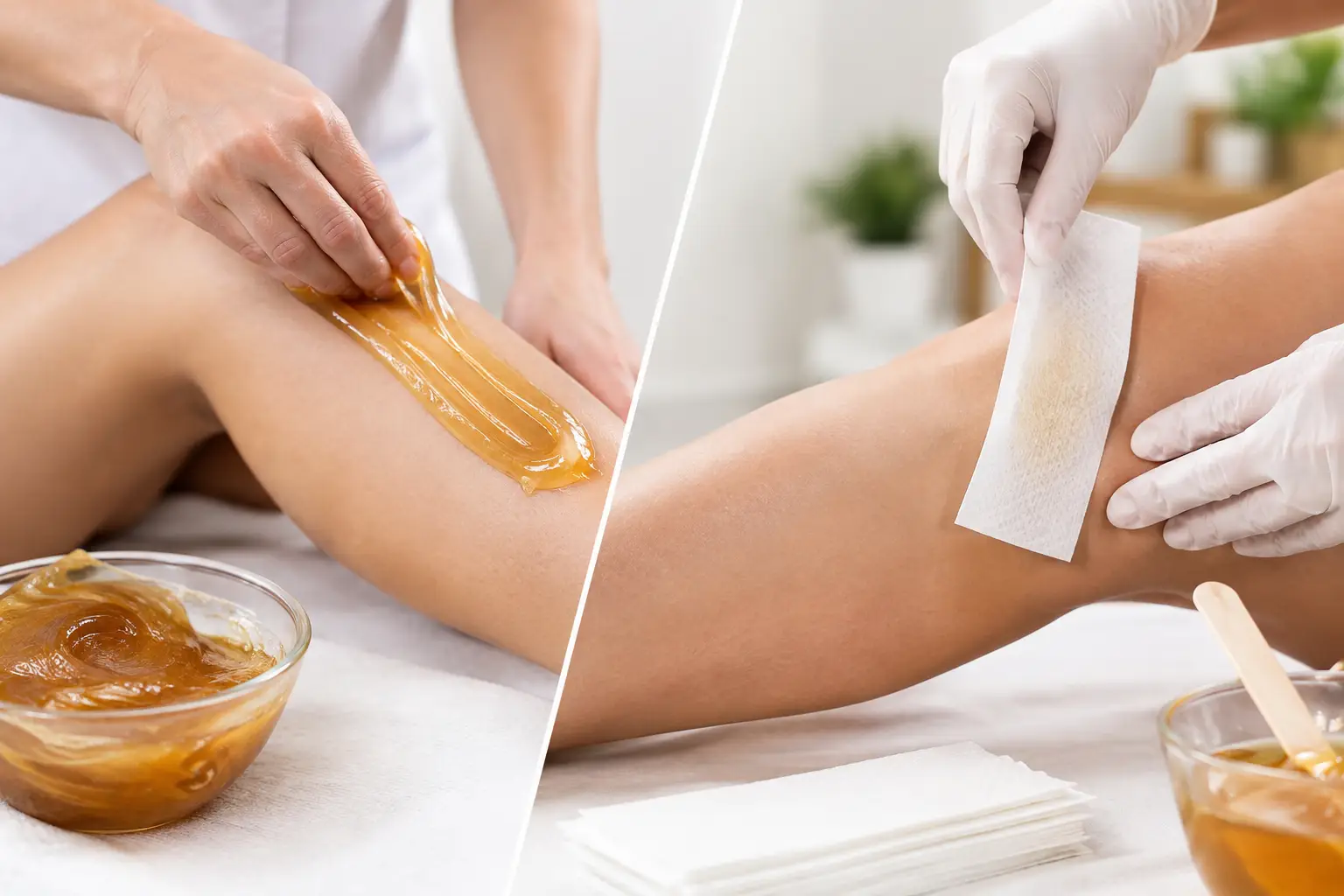
A Brazilian appointment can look very different depending on the practitioner’s technique, even when the sugar paste is made from the same simple, skin-conscious ingredients. In the conversation around manual sugaring versus strip sugaring, neither method is automatically better in every situation. The right choice depends on the body area, hair texture and density, skin condition, client comfort, and, above all, the practitioner’s training.
Both approaches can create beautifully smooth results when performed with care. Understanding the difference helps clients know what to expect and helps aspiring practitioners appreciate why technique, sanitation, and thoughtful service matter just as much as the paste itself.
What Is Manual Sugaring?
Manual sugaring, sometimes called the hand method, uses a small ball of sugar paste worked directly onto the skin with gloved hands. The practitioner molds the paste against the direction of hair growth, then removes it with a controlled flick in the natural direction of growth.
This is a highly tactile technique. A skilled practitioner can feel changes in hair direction, density, and skin tension as they work. That real-time feedback is one reason manual sugaring is especially valued for detailed areas and services where comfort and precision are essential.
The paste is typically used in small, controlled portions. With appropriate professional sanitation practices, the portion touching one area of the body is never returned to the main supply. This supports a clean, client-centered service from start to finish.
Why clients often love the hand method
For many guests, manual sugaring feels intentional and personalized. The practitioner can adjust their pace, pressure, and paste consistency as the service progresses. On areas where hair grows in several directions, this flexibility can make a meaningful difference.
Manual technique can also be wonderfully efficient for established maintenance clients whose hair growth is consistent. Because the practitioner works continuously with the paste, there is no need to pause to place and remove a fabric strip with each application.
That said, hand technique is not simply a faster version of sugaring. It requires practiced body positioning, paste control, skin support, and a clear understanding of hair-growth patterns. A beautiful result comes from skill, not from rushing.
What Is Strip Sugaring?
Strip sugaring uses sugar paste applied to the skin and removed with a clean, single-use strip. The practitioner still considers hair growth direction, skin tension, product consistency, and client comfort. The difference is in how the paste is lifted away.
This approach can be particularly useful on larger, flatter areas of the body. A strip may allow a practitioner to work efficiently across an area where the hair pattern is straightforward and the skin is easy to support. It can also be an approachable technique for newer practitioners who are learning how sugar paste responds to temperature, humidity, and varied hair types.
Strip sugaring is not a lesser service. It is simply a different application method, with its own strengths and technical considerations. When done professionally, it should still feel clean, calm, and considered.
Where strip technique can shine
A strip can offer helpful control when treating broader areas such as legs, arms, or the back. It may be a practical option when a guest has a generous amount of hair to remove or when the practitioner needs a little more structure in their application.
For a student, strips can create a useful foundation for learning correct paste placement and removal timing. But good technique still matters. Applying too much product, failing to hold the skin properly, or removing the strip at the wrong angle can affect both comfort and results.
Manual Sugaring Versus Strip Sugaring: The Real Differences
The biggest difference is not the end goal. Both methods are designed to remove hair from the root and leave skin feeling smooth. The distinction is in how the practitioner works, how adaptable the technique is, and what best supports the client in that moment.
Manual sugaring is often more flexible for contours, sensitive areas, and hair that changes direction. The practitioner can use a smaller amount of paste and make frequent micro-adjustments. It is a refined technique that rewards patience and repetition.
Strip sugaring can be a smart choice for larger areas and certain service flows. It gives the practitioner a clear removal surface and can make applications feel more manageable, especially while developing confidence. For some clients and body areas, it may also be the most comfortable, efficient option.
Comfort is personal. A guest who loves the feeling of a quick hand-method service may not have the same preference as someone who appreciates the predictability of strips. Rather than promising one universal answer, a thoughtful practitioner assesses the skin, listens to the client, and chooses accordingly.
Hair Length, Skin, and Service Timing
Hair does not need to be long for professional sugaring. One of the benefits of a well-trained technique is the ability to work with relatively short regrowth, provided there is enough length for the paste to grip effectively. If hair is very short, very coarse, or lying flat against the skin, the practitioner may adapt their method or recommend a little more grow-out time.
Skin condition matters too. Dryness, sensitivity, recent exfoliation, medication changes, and sun exposure can all influence a service. A professional consultation is not an extra formality. It helps protect comfort and allows the practitioner to choose the safest, most effective approach.
This is especially important for first-time guests, pregnant clients, and clients with mature or reactive skin. Gentle communication and a calm pace can transform an appointment from something intimidating into a supportive self-care ritual.
What This Means for Sugaring Practitioners
For practitioners, the question should not be, “Which technique can I learn fastest?” A better question is, “Which skills will help me deliver consistent, hygienic, comfortable care for a wide range of clients?”
Strong sugaring education teaches both technical execution and professional judgment. Students need to understand paste consistency, hair-growth mapping, skin tension, client positioning, sanitation, aftercare conversations, and how to respond when a technique needs to change mid-service.
Manual work is a valuable skill because it develops sensitivity and precision. Strip work adds versatility and can be useful across different body areas and service situations. Practitioners who understand both have more options, but they should never use a method beyond their current training or confidence level.
At The Sugar Shack, professional sugaring education is rooted in the idea that confidence comes from knowledge and practice. A practitioner who knows why they are choosing a technique can create a more comfortable experience, communicate clearly, and build the trust that keeps clients coming back.
How to Choose the Right Method for Your Appointment
Clients do not need to arrive knowing whether they want manual or strip sugaring. Your role is simply to share your goals, any skin sensitivities, your previous hair-removal experience, and how you are feeling that day. A trained practitioner can guide the rest.
If you are booking a detailed service or have hair that grows in multiple directions, manual technique may be ideal. If you are treating a broader area, strip technique may be a sensible part of the plan. Many experienced practitioners also use a combination of methods within one appointment when that creates the best result.
The best service feels personalized, never mechanical. It respects your body, protects your comfort, and leaves you with smooth skin and greater confidence in your routine. Whether the paste is lifted by hand or by strip, skilled care is what makes the difference.