
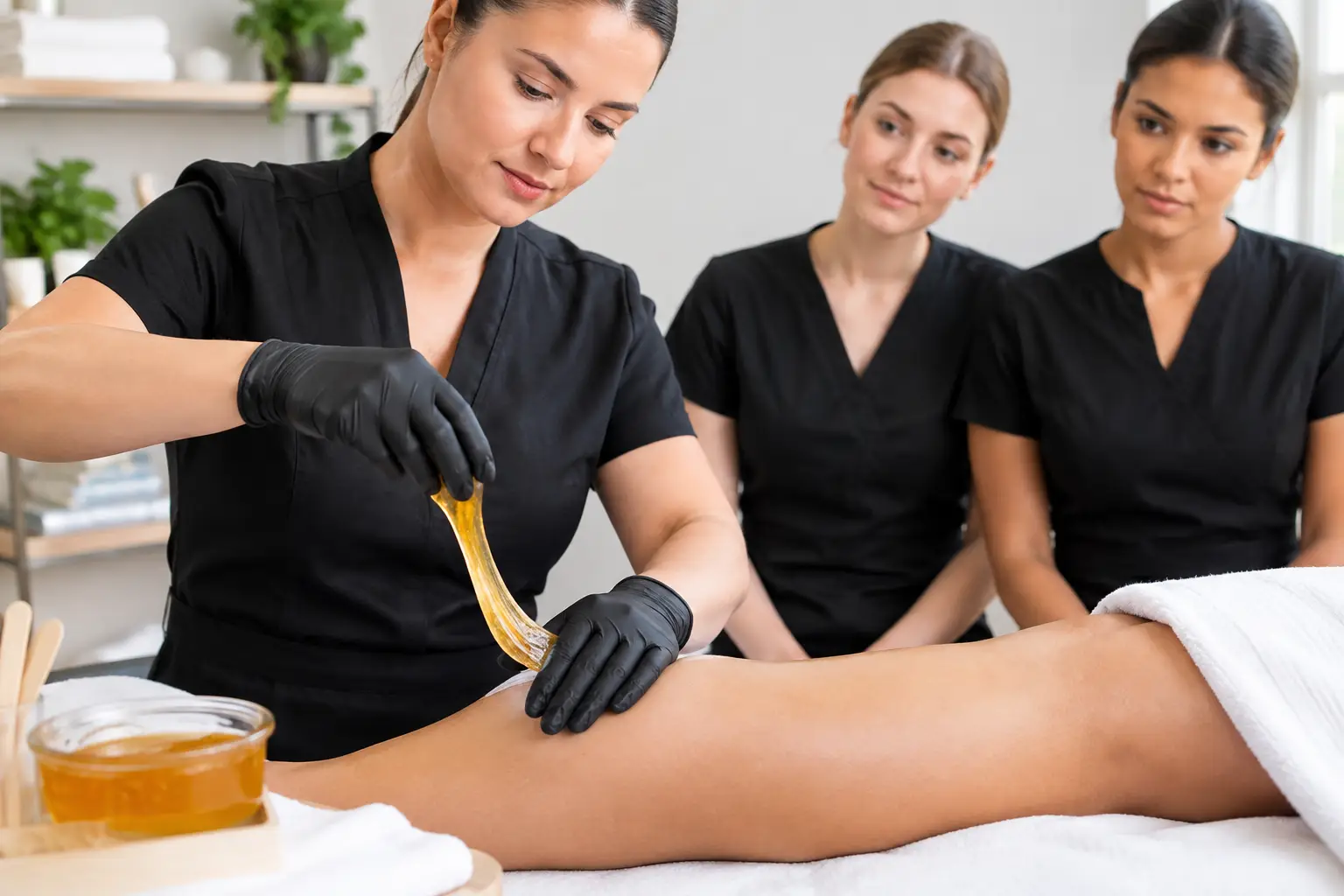
A sugaring class should leave you ready to work with real people, real skin, and real questions – not simply send you home with a certificate and a few memorized steps. For aspiring practitioners, Calgary sugaring classes can be the start of a flexible new skill, an expanded service menu, or a more independent career path. The quality of that start matters.
Professional sugaring is a hands-on craft. It asks for technical control, a calm presence, thoughtful sanitation, and the ability to make each client feel comfortable in their own body. The right education brings those pieces together, so your work feels polished from your first client conversation through aftercare.
What Calgary Sugaring Classes Should Teach
A strong class begins with the foundations, but it does not stay theoretical for long. Students need to understand the sugar paste they are working with, how it behaves at different temperatures, and how to select and manage consistency for the area being treated. This is the beginning of good technique, not a minor detail.
Sugaring uses a pliable sugar paste and a distinctive hand method to remove hair in its natural direction of growth. That difference affects everything from how the paste is applied and flicked away to how the practitioner supports the skin. When technique is taught carefully, it can help create a more efficient, comfortable appointment and a cleaner result.
Hands-on practice is essential. Watching a demonstration can make the movements appear simple, but practitioners build confidence through repetition: placing the paste, holding the skin correctly, reading the hair pattern, and adjusting their pressure and speed. A worthwhile course gives students time to practice with coaching rather than expecting precision to happen immediately.
Technique Is More Than a Single Motion
Bodies are not identical, and neither is hair growth. A trained practitioner learns to assess the treatment area before beginning. Hair may grow in several directions, skin can be more delicate in certain areas, and a client may arrive with concerns about sensitivity, previous irritation, or a special occasion on the calendar.
This is why training should cover more than one body area. Foundational services help students develop control, while full-body education introduces the practical changes required for different contours, hair textures, and comfort needs. Intimate services, in particular, require clear instruction, professional language, effective draping, and a respectful approach that protects a client’s dignity at every stage.
A good educator also makes room for troubleshooting. Paste that is too soft or too firm, hair that is very short, a missed patch, skin that needs a gentler approach – these are ordinary parts of practice. Students should learn how to respond without rushing or becoming flustered.
Sanitation Is Part of the Service Experience
Clients may not see every sanitation decision you make, but they feel the care behind it. Professional training should make hygiene a core skill, not a short section at the end of the day.
That includes preparing a clean treatment space, maintaining clean hands and tools, preventing product contamination, disposing of single-use items correctly, and knowing when to pause or decline a service. Students should understand how sanitation standards support both client well-being and their own professional reputation.
The consultation matters here, too. Before a service begins, practitioners need to ask thoughtful questions and recognize when a client’s skin condition, current health situation, or medication may call for extra care or a rescheduled appointment. Professional confidence is not about saying yes to every booking. It is about making informed, client-centered decisions.
Client Care Builds a Loyal Practice
The technical side of sugaring gets a client smooth. Client care is what makes them want to return.
For many guests, especially first-time clients, hair removal can feel vulnerable. They may worry about discomfort, what to wear, whether their hair is the right length, or whether they will be judged. Training should prepare practitioners to answer without making assumptions. Warm, straightforward communication helps clients settle in and trust the process.
Look for classes that teach the full appointment flow: welcoming the client, conducting a consultation, explaining what will happen, checking in during the service, and giving clear aftercare guidance. These small moments create an elevated experience. They also help prevent confusion after the appointment, when clients want to know how to care for their skin and when to rebook.
Inclusivity belongs in this conversation. Every client deserves a respectful service, regardless of age, body type, gender expression, or level of experience. A professional practitioner does not treat body hair as a problem to be fixed. They offer a personal-care service that can help someone feel more comfortable, smooth, and confident.
Choosing a Class That Supports Your Goals
Not every student enters training with the same plan. A licensed esthetician may want to add a sought-after specialty to an established menu. A career changer may be looking for a practical skill with room to grow. Someone returning to work after caregiving may value a service that can fit into a flexible schedule.
Before enrolling, ask what the course is designed to help you do next. Is it an introductory experience, or does it provide the depth needed to begin offering professional services? Does it include live demonstration and supervised practice? Are sanitation, consultations, and aftercare covered alongside hand skills? Will you understand how to price your time, organize your treatment space, and set realistic service expectations?
It also helps to ask what support exists after class. Learning does not stop when the training day ends. Opportunities to refresh a technique, ask a product question, or receive guidance as you begin working can make a meaningful difference during the early stages of practice.
If you are comparing Calgary sugaring classes, these five questions can help you look beyond a course description:
- How much supervised hands-on practice is included?
- Which body areas and client-care scenarios are covered?
- How does the program teach sanitation and contamination prevention?
- What credentials or real-world experience does the educator bring?
- Is there ongoing support for students after training?
The most affordable option is not always the strongest value. A lower upfront cost may mean less practice time, limited feedback, or gaps in the business and client-care knowledge that help a new practitioner feel prepared. On the other hand, a more extensive course should be clear about what is included and why that training time matters.
From New Skill to Professional Opportunity
Sugaring can be a meaningful addition to a beauty career because it combines technical work with relationship-based service. Returning clients often appreciate consistency: a practitioner who knows their preferences, treats their skin thoughtfully, and makes each appointment feel relaxed and professional.
Building that kind of practice takes time. New practitioners may begin with foundational services while refining their speed and confidence. As their skills develop, they can expand their menu, improve appointment flow, and build a reputation through dependable care. The goal is not to rush toward a packed schedule. It is to create a standard of work you are proud to stand behind.
The Sugar Shack’s training approach is rooted in that standard: skilled technique, clean practices, thoughtful product knowledge, and client care that feels warm without losing professionalism. For students, those principles create a stronger base than a quick demonstration ever could.
A great class will not promise that every appointment will feel effortless on day one. It will give you the knowledge to keep practicing with purpose, the standards to protect your clients, and the confidence to grow into a practitioner people are happy to see again.