
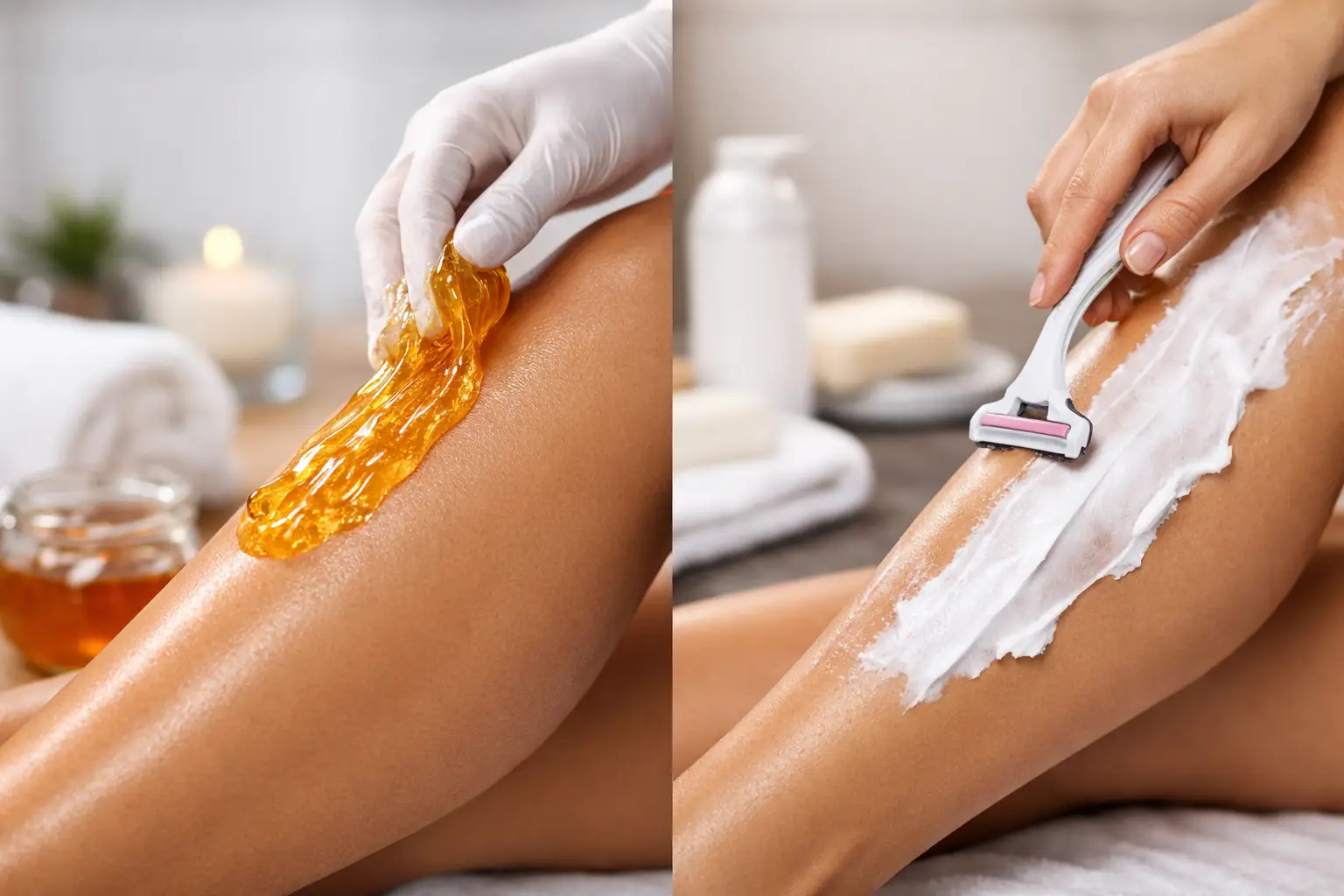
That rough, prickly feeling returning a day after shaving can make hair removal feel like a chore with no real finish line. Understanding the sugaring versus shaving benefits can help you choose a routine that supports your skin, schedule, comfort, and definition of self-care – without treating hair removal as an obligation.
Shaving is quick, familiar, and easy to do at home. Sugaring is a professional technique that removes hair from the root using a simple sugar paste. Both have a place, but the experience and results are distinctly different. If you are considering a first sugaring appointment, moving away from frequent shaving, or learning more about professional body sugaring, the details matter.
Sugaring Versus Shaving Benefits at a Glance
The central difference is where the hair is removed. A razor cuts hair at the skin’s surface. Sugaring removes the hair from the follicle, which is why the skin tends to stay smooth longer.
For someone who needs a fast touch-up before heading out, shaving may be the practical choice. It requires little preparation and can be done in minutes. The trade-off is that because the hair remains beneath the skin, regrowth can become visible or feel textured quickly. For many people, that means shaving every day or every few days.
Sugaring asks for a little more planning, but it can create a longer window of smoothness. Results vary with each person’s hair growth cycle, area being treated, and consistency of appointments, yet many guests enjoy smooth skin for several weeks. Over time, regular sugaring may also make the hair feel finer and softer as it grows back.
Neither option is universally better. The right choice is the one that feels sustainable for your skin and your life. Still, for clients seeking a lower-maintenance routine and a polished, skin-conscious service, sugaring often offers benefits that shaving cannot provide.
Longer-Lasting Smoothness, Less Daily Maintenance
Shaving removes the visible portion of hair, so regrowth can appear quickly. The familiar stubble is not the hair becoming thicker – shaving does not change the number or thickness of follicles – but a blunt-cut hair tip can feel more noticeable as it emerges.
With sugaring, hair is removed from the root. That means it needs time to grow through a new cycle before it is visible again. Instead of reaching for a razor every morning, many guests schedule maintenance appointments approximately every four to six weeks. Your ideal timing may be shorter or longer depending on your natural growth pattern and the area being sugared.
This can be especially appealing for bikini and Brazilian services, underarms, legs, and areas where daily shaving is inconvenient or irritating. It is also useful before a vacation, a special event, or any season when you would simply prefer to think less about upkeep.
The value of consistency
A regular sugaring schedule allows a skilled practitioner to work with your hair growth more effectively. Hair grows in cycles, not all at once. As you maintain appointments, more hairs may be removed in the same stage of growth, helping results feel more consistent from visit to visit.
You do not have to commit to a perfect schedule for sugaring to be worthwhile. But consistency is often where clients notice the greatest difference in their maintenance routine.
A Gentle Exfoliating Effect for the Skin
Another meaningful benefit of sugaring is its exfoliating action. The sugar paste is applied and removed with professional technique, lifting hair along with surface-level dead skin cells. The result can be skin that feels exceptionally soft and looks fresh, not merely hair-free.
Shaving can also exfoliate, but the razor’s blade works directly against the skin. Frequent passes, pressure, dull blades, or dry shaving can leave some people with redness, small cuts, or a compromised skin barrier. Those concerns are not guaranteed, but they are common reasons guests begin looking for a different option.
Sugaring is not entirely sensation-free, and skin may show temporary pinkness after a service. However, the paste is made from simple, skin-conscious ingredients and is handled with a technique designed to prioritize comfort. A well-trained practitioner adjusts their approach for the body area, hair texture, skin condition, and client comfort level.
For sensitive or mature skin, professional assessment matters. Certain medications, active skin conditions, recent exfoliation, and individual sensitivities can affect which hair-removal option is appropriate. A thoughtful consultation is always more valuable than a one-size-fits-all recommendation.
Comfort Is Personal, Not a Promise
People often ask whether sugaring hurts more than shaving. Shaving usually feels painless in the moment, unless there is a nick, irritation, or razor burn afterward. Sugaring has a brief pulling sensation because the hair is being removed from the root.
That sensation is highly personal. Your first appointment may feel more intense than later visits if you have been shaving regularly and have dense, coarse growth. Hormonal changes, stress, sleep, hydration, and where you are in your cycle can also influence sensitivity.
What makes a significant difference is practitioner skill. Proper paste selection, body positioning, skin support, speed, and communication can make the service feel much more manageable. At The Sugar Shack, client comfort is treated as part of the service standard, not an afterthought. You should feel welcome to ask questions, request a pause, and communicate what you need.
Fewer Razor-Related Bumps for Many People
Razor bumps and ingrown hairs can be frustrating, particularly in areas with coarse or curly hair. They can happen when a shaved hair grows back and becomes trapped or irritated near the skin’s surface. Repeated shaving, friction from clothing, and using an old or dull razor can all contribute.
Sugaring cannot guarantee that you will never experience an ingrown hair. Your genetics, hair texture, skin, aftercare, and daily habits all play a role. But removing hair from the root, along with the gentle exfoliating effect of the service, may help many people experience fewer razor-related bumps over time.
Aftercare helps protect your results. For the first day or two, give newly sugared skin some breathing room. Avoid intense heat, heavy friction, and products that may sting or clog the area. Once the skin has settled, gentle, regular exfoliation and moisture can support smoother regrowth. Your practitioner can recommend an approach that suits the area treated and your skin’s needs.
Hygiene: At-Home Convenience Versus Professional Care
A razor can be hygienic when it is clean, sharp, stored dry, and never shared. In reality, it is easy to keep using a blade past its best days or leave it in a damp shower where bacteria can thrive. Small cuts can make that routine less comfortable than expected.
Professional sugaring offers a different level of care. A properly trained practitioner follows sanitation practices designed to protect every client throughout the service. Fresh supplies, clean treatment spaces, correct glove use when needed, and careful product handling all matter. The sugar paste itself is all-natural, biodegradable, and made from edible ingredients, but professional sanitation is about the full service process, not ingredients alone.
This distinction is particularly important for intimate services. You deserve an environment that feels calm, respectful, clean, and well organized, with a practitioner who can explain what is happening at every stage.
When Shaving May Still Make Sense
Sugaring requires some visible hair growth before an appointment so the paste can effectively grip the hair. If you need immediate hair removal and have just shaved, waiting for enough growth may not fit your timeline. In that moment, shaving may be the most convenient option.
Budget, access to a trained practitioner, travel, and personal preference are also real considerations. There is no need to feel pressured into one method. Some people sugar their bikini area and underarms while shaving their legs between appointments. Others reserve sugaring for times when they want longer-lasting results. Your routine can be flexible.
If you are new to sugaring, start with an area that feels comfortable, such as underarms or lower legs, and notice how your skin responds. For a more complete transition away from shaving, let the hair grow to about the length of a grain of rice before your appointment. Avoid aggressive exfoliation immediately beforehand, arrive in comfortable clothing, and share any relevant skin concerns during your consultation.
Choosing the Routine That Feels Like Care
The best hair-removal routine should leave you feeling informed, comfortable, and confident in your own skin. Shaving offers speed and convenience; sugaring offers longer-lasting smoothness, professional care, and a gentler-feeling maintenance rhythm for many clients.
Rather than asking which method is best for everyone, ask what would make your routine feel easier and more supportive. A skilled sugaring practitioner can help you begin with realistic expectations, thoughtful aftercare, and a service experience centered on your comfort.